This month's LPCA meeting was fairly straight forward and without drama. Starting a little late to allow everyone time to get in on the call, the December meeting heard an excellent presentation on the National Convention, approved the 2026 budget and dealt with some rather annoying technical issues.
The evening started off with some technical mishaps, and Mimi Robson explaining the very likely possibility that the LPCA domain had been blacklisted and was causing problems with the delivery of emails. As unfortunate as that is, she assures everyone that the problem is being looked into.
Pat Ford gave a well-received presentation on the upcoming LNC National Convention in Grand Rapids Michigan. There's lots of breakout sessions, key-note speakers and even a Crypto Corner. For more info click here.
Mimi Robson our Treasurer was next on the agenda with a dual report, both the region 4 LNC report and the financial report including the proposed 2026 budget. The full in-person LNC meeting can be viewed on YouTube or by clicking here.
Dave Schrader gave an extremely interesting presentation on the "Lapsed Member Project", something he had been working on to help the LPCA reach those former dues paying members that have fallen off for one reason or another. Using L2 data he has been able to identify several hundred former members that could be targeted to rejoin the LPCA and has begun creating demographic profiles for targeted outreach. He believes that by creating messaging directed towards each demographic we may be able to convince former members to give us another chance. After all Liberty doesn't come cheap!
The 2026 proposed budget was approved with little discussion. Mark did bring up the fact that his county has been paying for the State Fair Booth for several years and asked the State Party to take over that cost. This was quickly solved by Loren offering to pay the State Fair fees out of the Chair's discretionary Fund.
Between reports Loren proposed the LPCA join the LP Oregon's amicus brief against Civil Asset Forfeiture. The executive committee agreed and a letter joining the amicus brief is being drafted.
Closing out the night there was a discussion and rearranging of the membership committee with Joe Dehn motioning to increase the number of members from 5 to 7, seconded by Brandon the motion passed. Joe highlighted the need for more candidate recruiters and supporters as the window for SIL petitioning begins.
That's it for this month. Stay Classy California!
🎖Ex-Com Recon
by Wesley Martin
Our Executive Committee is full of hard-working individuals in the Liberty Movement. This month I'd like to take a brief second to look at the continued work that June Genis and the other board members have been doing with the Ranked Choice Voting initiative. CalRCV believes that proportional RCV with multi-member districts is the best possible electoral system for California's Assembly and Senate, and single-winner RCV for Executive Offices and Federal offices.
Ranked choice voting, known as RCV, is a simple reform that can lead to significant benefits for our cities, state, and country. It's a commonsense upgrade from the broken single-choice voting approach that favors entrenched interests and underlies so much political dysfunction.
It's straightforward: RCV lets you rank candidates 1st, 2nd, 3rd and so on instead of being forced to choose just one. If your first choice can’t win, your vote automatically transfers to your second choice.
To Learn more about Ranked Choice Voting be sure to check out:
The end of the year encompasses a variety of reasons for gift giving. Obviously, we’re in a holiday period here. But this is also a place for people to appreciate one another’s activity over the year. The “end of the year bonus” (paging Clark Griswold …) is a not-uncommon phenomenon, and lots of people are in the habit of tipping on certain contractors’ last bill of the year (tip your yard guy if you have one, those guys work hard).
I’d like to take a moment here to talk about a gift you can give yourself: the gift of activism.
Lots of people dream of activism. Few truly do it. Arguing on social media doesn’t count. Nobody’s mind gets changed by being insulted online. The internet has enough influencers, and you’re not going to be the next one.
That can be a hard pill to swallow. It’s easy to feel like you’re not accomplishing anything, get depressed about it, and fall to despairing motionlessness (or overcompensate by metaphorically foaming at the mouth on social media). But that’s what government wants you to do. Government is good at convincing those it rules that involvement is useless; they gaslight you into believing you can’t accomplish anything. The despondent are more willing to just complain on the internet while government runs unchecked. Government wants you despondent. They want you to believe you don’t matter.
Don’t fall for the trick. You can matter in the place where you live. Here at the end of the year, as you review your activity and achievements of 2025 (or maybe the lack of them), give yourself the gift of activism.
The key is to start small. Find the agendas for your city council or school board. Start going to the meetings. You don’t need to speak out (yet). You don’t need to be angry (yet). What you need to do is get the lay of the land. Too many libertarians skip this step, but it’s like learning the rules before you get on the field–if you don’t figure out how the game is played, all you’ll do is lose and lose and lose until you give up. And government wants you to give up. Don’t let leviathan win.
Understand what’s going on in your area. Figure out who’s who, who’s supposed to be in charge, who’s really in charge, and who defers to whom. Take notes. Figure out who appoints seats on local commissions. Chat with your city council creature or schoolboard weasel (politely!). Understand who these people are and seek to gain that understanding without grandstanding and rancor. For better or for worse, your neighbors are still your neighbors. Learning how to get along with them will get them on your side far faster and stronger than shouting at them for their mistakes. If you’re ever going to run for anything, you need to learn to be friendly. Local involvement is how you do that.
And as you do that, as you get out of your house, get up from your keyboard, and go do that, you’re going to find that government is more accessible than you think. And you can access it. It will take time, so be patient. But as you work toward understanding and involvement, you will gain confidence and strength. You will learn who to talk to, and who will listen. You will learn who wants what, and how you can work with those people when your interests align.
You’ll feel better, because you’ll BE better. You’ll be a better neighbor, a better activist, and yes, a better libertarian.
Give yourself the gift of activism this December. It’ll pay dividends all through 2026 and beyond. You’ll be amazed.
Putting Out a Grease Fire
By Shawn Osbourne
When I was a senior in high school, we had a wide selection of electives we could take to fill out our credit requirements after finishing everything we needed to graduate. One of these classes was called Senior Foods. This food class was one a lot of students took because there was no homework, you learned a little bit of cooking, along with some kitchen safety, and you could talk to your friends pretty much the whole class while you were preparing your food. I personally had an epic fail in this class, however I was able to pick up some basic knowledge.
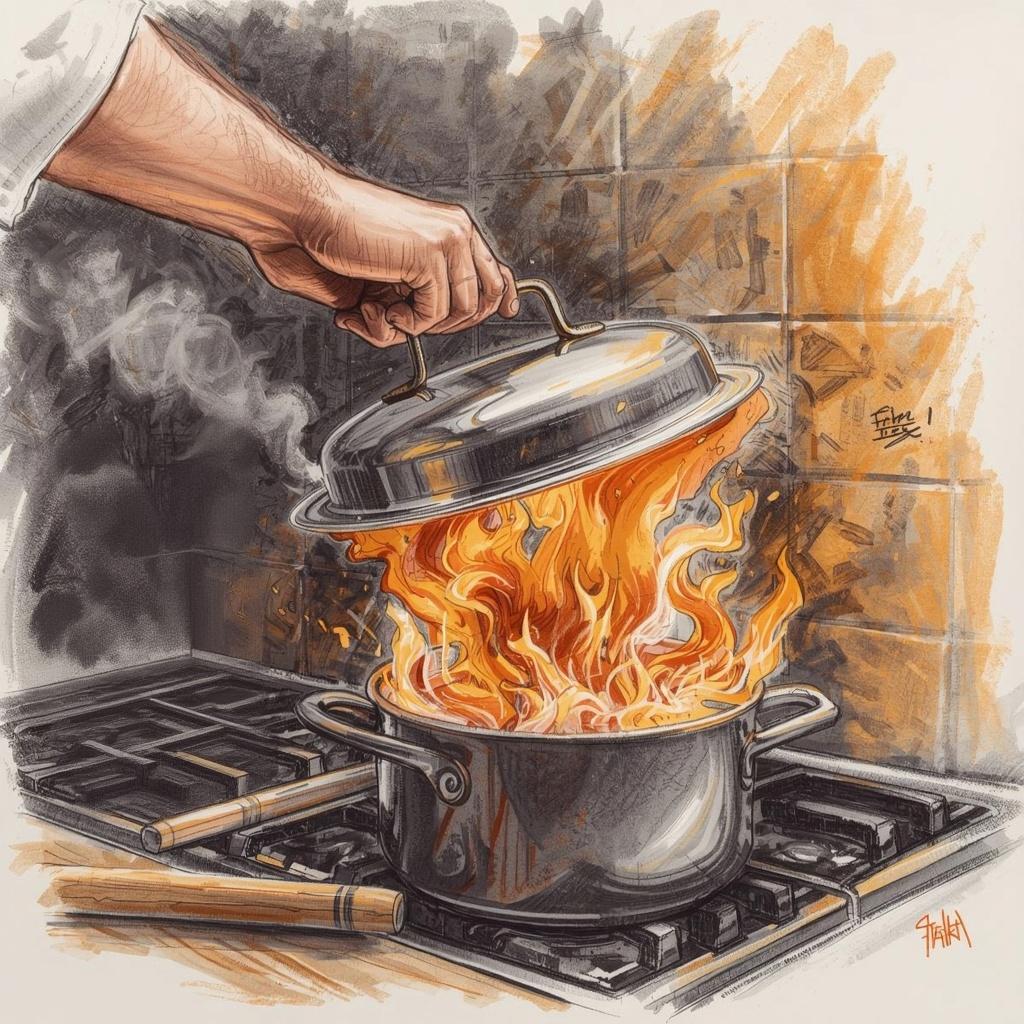
At present, as an adult living in California, I look around the Golden State and see what a disaster in progress it is. It reminds me of a grease fire, and the politicians tragically did not have the economic equivalent of a Senior Foods class to guide them. The only answer they can come up with to put out the fire is to throw water on it in the form of our tax money.
Now, I'm sure many of these politicians have the best intentions when they do the things they do, yet their actions cause the opposite to happen from what they were going for. The difference here is that after they threw water on the grease fire once, they did not learn that that was causing things to get worse and keep going back for more water to throw on the fire.
For example, California has spent billions of dollars to get people off the streets, yet the number of people living on the streets keeps increasing. They wrongly assume that they haven't thrown enough water on this grease fire, and they're hunting for even bigger buckets of your cash to dump on the conflagration.
Look at the new twenty-dollar fast-food wage—already wiped out nineteen thousand jobs, most of them entry-level jobs for folks who need work now, not handouts later. Then there's rent control: Argentina tossed theirs out last year; units popped up everywhere and prices actually dropped. No government needed.
It would be so much better if they realized that, instead of a cup full of progressive policies—such as rent control, refrigerator and air-conditioning requirements, minimum-wage laws, and zoning laws—they should be looking to the economic fire extinguisher of the free market to douse this blaze quickly and efficiently.
Being a libertarian in California can be very frustrating. It's almost like being in the kitchen watching a grease fire break out and seeing somebody reach for a bucket of water, passing right by a fire extinguisher. You see what's about to happen and you're screaming, “Use the fire extinguisher!” but your pleas go unheard.
We libertarians need to find a way to make our voice heard and explain that somebody like me—who really won't cook at home and would be eating out someplace—needs neither a stove nor an air conditioner because I'm usually at work during the day when it is hottest. Yet if I were a renter, I would end up paying more for an apartment with these amenities I seldom (if ever) use at all.
When government takes choice away from us, they are basically hiding the fire extinguisher and putting people in worse situations—such as not having a job because minimum-wage laws priced them out of the labor market or becoming homeless because rent control and zoning laws created housing shortages that drove prices through the roof.